As the Welsh Radiotherapy Medical Physics (RaMP) Programme enters its second year, we reflect on the momentum it has already built by embedding high‑quality research opportunities into MSc Medical Physics training at Swansea University. Funded by the Advancing Radiotherapy Cymru (ARC) Academy, RaMP continues to play a key role in developing the next generation of radiotherapy research leaders.
Radiotherapy is one of six priority research themes identified in CReSt, Wales’ first all‑Wales cancer research strategy, and strengthening the research workforce in medical physics was recognised early on as being essential. Launched in 2025, RaMP was created through a partnership between Swansea University, South West Wales Cancer Centre, Velindre Cancer Centre and the Wales Cancer Research Centre, with planned expansion to the North Wales Cancer Centre.
Each year, the scheme offers up to five predefined research projects for incoming MSc students at Swansea University, which are applied for competitively and each come with up to £2k of funding to support the successful students with travel, specialist training, conference attendance and dissemination activities. These projects are novel, multidisciplinary and firmly rooted in clinically relevant challenges in radiotherapy physics. Students benefit from supervision teams that bring together clinical and academic expertise from across Welsh centres, fostering collaboration, shared learning and strong cross‑site connections.
A defining feature of the RaMP programme is its requirement for one or more academic outputs, with submission of a national or international conference abstract as a minimum. In doing so, RaMP is already raising the quality, visibility and impact of MSc‑level research while supporting students’ professional and academic development.
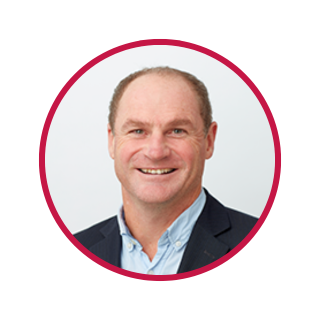
Dr Richard Hugtenburg, RaMP initiative co-lead and Programme Director of the MSc Medical Radiation Physics/ MSc Clinical Science (Medical Physics) at Swansea University
“The RaMP awards mean that these students have the opportunity to present their research in an international forum, making the most of the hard work and time that they have invested, and developing as individuals.”
In 2025, we supported five students in Swansea and Cardiff as our first cohort on the RaMP scheme, with a mix of full time and part-time STP MSc students taking up projects.
- Adam Cooper has been evaluating the CIRS distortion phantoms for MRI-guided planning (lead supervisor: Jon Phillips, Swansea)
- James Jenkins investigated ways to reduce the risk of short-and-long-term neurocognitive impairment in individuals receiving radiotherapy treatment for head and neck cancer (lead supervisor: Ryan Lewis, Swansea)
- Ieuan Jones evaluated the Ethos planning approach compared to EdgeVCC created radiotherapy plans (lead supervisor: Rhys Carrington, Cardiff)
- Ruby Mensah explored the effect of metal stents on radiotherapy dose distribution using Monte Carlo methods (lead supervisor: Richard Hugtenberg, Swansea)
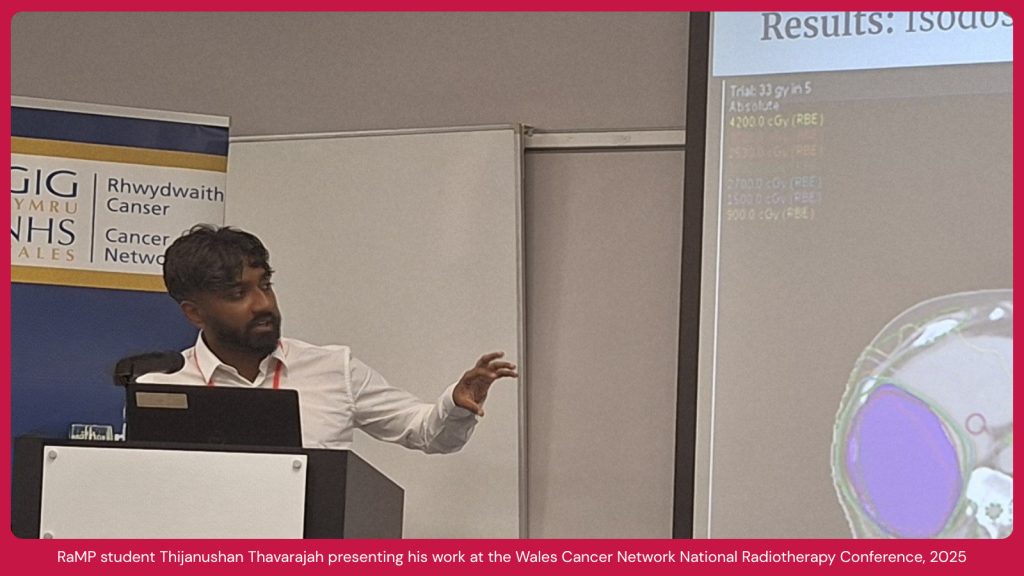
- Thijanushan Thavarajah studied isotoxic dose escalation for hepatocellular carcinoma and liver metastases (lead supervisor: Owen Nicholas, Swansea).
In our 2026 call, four projects were taken up which will be starting soon.

Dr Owen Nicholas, RaMP initiative co-lead and lead applicant on the RaMP ARC award“
RaMP is important because it focuses of our future radiotherapy workforce. This programme allows talented students gain valuable research and networking opportunities, developing tools they take forward into their future career in medical physics. Targets have been met for the first two years, and we are looking forward expanding the programme further in the coming years.”
Looking ahead, RaMP is laying foundations for the future. The programme aims to build a sustainable pipeline for PhD projects, provide preliminary data for clinical trials, and strengthen radiotherapy research capacity across Wales. If any radiotherapy teams in Wales are interested in becoming involved in supervision in future years, or have suggestions for medical physics projects that could be offered, please get in touch via WCRC and we would welcome your involvement.