A major new clinical trial led by researchers from Swansea Bay University Health Board and the University of Cambridge has secured funding through Cancer Research UK’s Clinical Research Funding Scheme to investigate whether higher-dose radiotherapy can improve outcomes for people with inoperable stomach cancer.
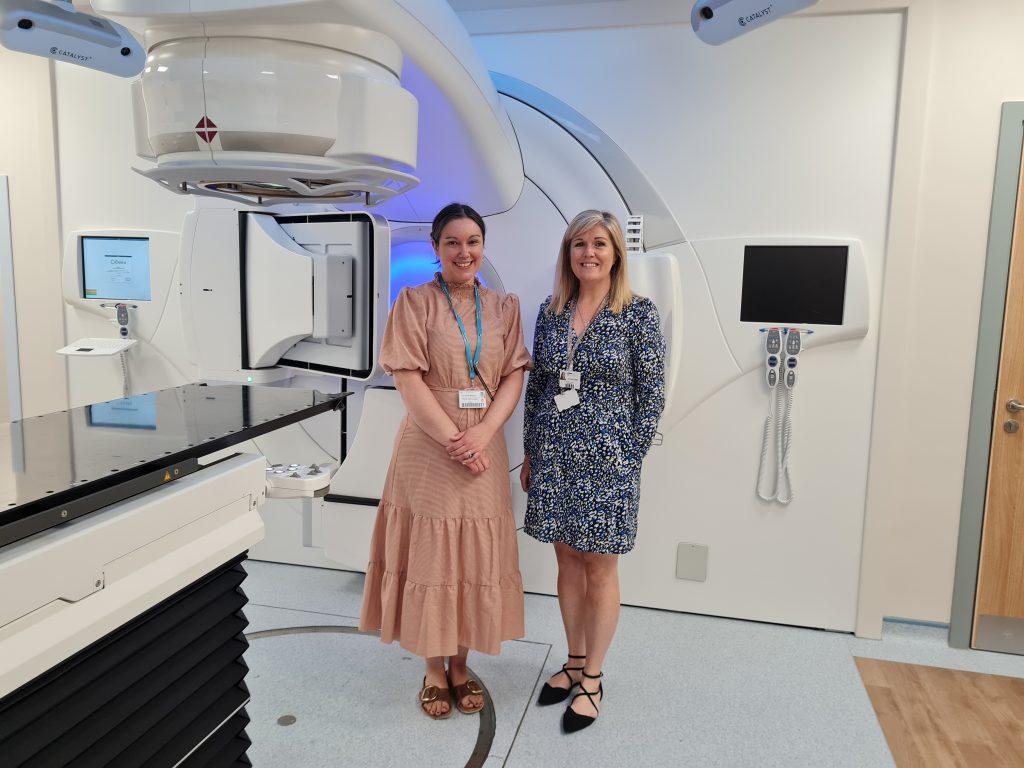
The GastroSCOPE trial is co-led clinically by Dr Sarah Gwynne, Consultant Clinical Oncologist at Swansea Bay University Health Board, and Dr Amy Case, a former Wales Cancer Research Centre (WCRC)-funded Clinical Research Fellow. The translational research programme is co-led by Dr Gwynne and Dr Chris Jones from the University of Cambridge.
In the earlier stages of developing GastroSCOPE, a Health and Care Research Wales Faculty personal award gave Dr Gwynne the protected time to develop her research idea into a full study proposal. The award enabled her to review the evidence, build collaborations with researchers across the UK and prepare the study for larger-scale funding.
The UK-wide randomised controlled trial will recruit 558 patients across 28 centres, comparing standard treatment with and without additional higher-dose radiotherapy.
Stomach cancer surgery offers the only chance of cure, but most patients are diagnosed when surgery is no longer possible. For these patients, treatment options remain limited and often do not adequately control symptoms or prevent disease progression.
GastroSCOPE aims to determine whether delivering a higher dose of radiotherapy alongside standard care can slow tumour progression, reduce distressing symptoms and improve patients’ quality of life. The trial will include two groups of patients: those who are able to receive chemotherapy and those who are not.
Alongside evaluating clinical outcomes, the research team will investigate advanced imaging techniques, tumour biology and blood biomarkers to better understand why some patients respond better to treatment than others. Patients have also played a central role in designing the study, helping to ensure the trial is accessible and focused on the issues that matter most to those living with stomach cancer. If successful, the findings could change national treatment guidelines and significantly expand treatment options for patients with inoperable stomach cancer in the UK and internationally.
Dr Sarah Gwynne said:
“This funding from Cancer Research UK will allow us to answer a question I have been asking for the last 13 years as a consultant – how we can bring the benefits of radiotherapy seen in other cancers into the treatment of patients with inoperable stomach cancer.
“A lot has changed in those 13 years, with better drugs and advances in radiotherapy techniques, but we still don’t know how and when to combine them to treat this disease – one of the reasons Cancer Research UK has designated stomach cancer a cancer of unmet need.
“Through the funding Cancer Research UK have given to run this trial, we can start to answer that question, offering more treatment options to the patients we see in our clinics, aiming to improve their symptoms, life expectancy and quality of life. If positive, this trial could change practice here and around the world. What a privilege and opportunity.”
Dr Amy Case said:
“I started my journey with the GastroSCOPE team thanks to an MD research fellowship partly funded by WCRC. This financial support enabled me to dedicate the necessary time and have the academic guidance to investigate the role of radiotherapy for inoperable gastric cancer – work that has informed the design of the GastroSCOPE trial.
“I am extremely grateful to Dr Gwynne and the WCRC for supporting me as an early-career researcher. Their support has opened the door to this exciting opportunity – not only advancing my own academic development, but, more importantly, offering the potential to transform the treatment landscape and improve outcomes for patients across Wales and the wider UK living with gastric cancer.”
The award represents a significant milestone for the GastroSCOPE team and highlights the strength of collaboration between clinicians, researchers and patients across the UK. By combining radiotherapy with translational research, the trial aims not only to improve treatment today but also to provide new insights that will shape future personalised approaches for people diagnosed with inoperable stomach cancer.