
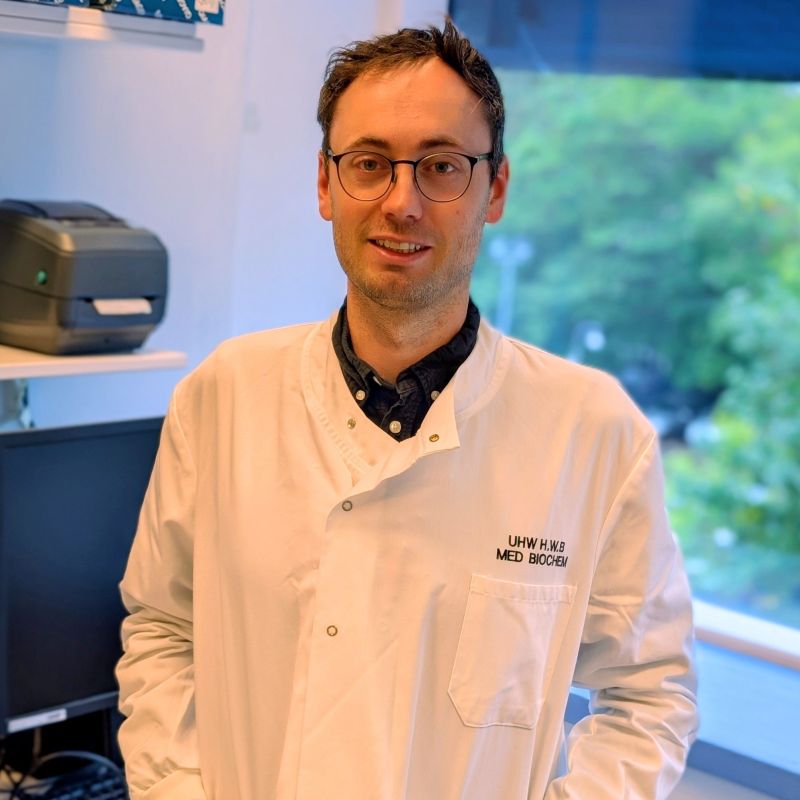
Dr Bruce MacLachlan, a cancer researcher at Cardiff University, has been awarded a prestigious five-year, £500,000 fellowship from Cancer Research Wales to advance his work developing immunotherapies designed to benefit more people with cancer.
The award follows a period of support from the Wales Cancer Research Centre (WCRC), whose bridging funding enabled Dr MacLachlan to continue his research and build on his work while preparing his fellowship application.
Based at Cardiff University’s School of Medicine, Dr MacLachlan’s research focuses on harnessing the body’s immune system to recognise and destroy cancer cells. His work aims to help develop new immunotherapies that are effective across a wider range of genetic backgrounds, helping to address inequalities in who can benefit from these treatments.
Immunotherapy has transformed cancer treatment for some patients by helping the immune system identify and attack cancer cells. However, differences in people’s inherited genetic makeup can affect how their immune systems recognise cancer, creating challenges when developing treatments that work across diverse populations.
Dr MacLachlan is focusing on CD4+ T-cells, a type of white blood cell that plays an important role in the immune response. By investigating what these cells recognise on cancer cells, he hopes to identify new ways to direct the immune system towards eliminating cancer.
Reflecting on the motivation behind his research, Dr MacLachlan explained that he has repeatedly encountered the phrase: “An exciting new therapy, as long as you are HLA-A2+”.
He added: “As I said during my interview, we cannot continue this way.”
His research aims to develop the knowledge, tools and potential therapeutic candidates needed to harness CD4+ T-cells and create treatments that work across different HLA class II types. HLA molecules help the immune system distinguish between different targets, and genetic variation in these molecules can influence how people respond to immunotherapies.
By considering this diversity from the outset, the research aims to help make future cancer treatments more widely applicable, regardless of a person’s genetic background.
Dr Maclachlan’s success highlights the importance of supporting researchers at key stages in their careers and investing in promising research that has the potential to improve outcomes for people affected by cancer.
“It’s a great privilege to be awarded Fellowship funding from Cancer Research Wales and I am extremely grateful that they have entrusted me with delivering impact for their generous donors. A massive thanks to everyone who has helped me get this far, especially my mentors Andrew Godkin and Awen Gallimore, plus everyone in the lab past and present.”
The five-year fellowship will allow Dr MacLachlan to build on his research and work collaboratively with other experts to bring discoveries closer to new treatments.
Reflecting on his ambitions for the research, Dr MacLachlan said: “By ensuring genetic differences are considered from the outset, my research aims to make such therapies work for all people.”